Cloud Collaboration for Architects: Best Practices for Small Firms
As a small architecture firm owner or team member, you face unique challenges every day. You have to streamline projects, manage client communication, and keep track of […]
The Financial In-House System (FINS) provides that structure.
FINS is designed for project-based firms where financial operations must align billing cycles, subcontractor payments, and payroll processes.
When structure is missing, financial operations become disorganized, time-consuming, and difficult to trust.
Financial operations become disorganized when processes lack structure and consistency. Transactions are recorded unevenly, accounts fall out of balance, and records drift out of alignment. Structured workflows restore order by bringing financial activity into a dependable rhythm.
Financial operations become time-consuming when processes lack structure and consistency. Tasks are repeated, issues are revisited, and effort expands beyond what is necessary. Structured workflows reduce time spent on routine work by eliminating rework and streamlining recurring tasks.
Financial operations become difficult to trust when processes lack structure and consistency. Uncertainty builds, records feel incomplete, and it becomes unclear whether everything is correct. Structured workflows restore confidence by keeping financial records accurate, current, and reliable.
Structured workflows performed in sequence and at regular intervals bring consistency, control, and clarity to financial operations.
Financial operations require consistency and control to remain accurate, complete, and dependable. When work is performed in a consistent and repeatable manner, financial information becomes easier to trust and maintain.
This is achieved through structured workflows performed in a defined sequence and at regular intervals. When the work is clearly defined, processes become repeatable, tasks are completed reliably, and financial operations stay aligned.
A financial operating system provides this structure. It defines how financial work is performed, when it is performed, and how each process connects—allowing firms to execute financial operations consistently within their own teams and systems.
Structured workflows within the FINS Standard keep operations consistent and dependable.
Reliable financial operations begin with accurate records. Structured reconciliation workflows keep transactions complete, accounts balanced, and financial records aligned with year-end reporting.
Financial records stay organized through structured document workflows. Receipts and bills are captured electronically and linked to transactions so documentation remains accessible, orderly, and ready for reporting or review.
Compensate your team through consistent payroll workflows aligned with the FINS framework. Payroll platforms such as Gusto support direct deposit, tax filings, and year-end reporting within these structured processes.
Employee benefits and payroll deductions remain coordinated within the payroll workflows of the FINS framework. Structured onboarding and benefits administration help maintain accurate employee records and payroll deductions.
Project-based firms rely on disciplined billing processes. Structured billing workflows support project setup, time tracking, and invoice preparation using tools such as BigTime Software.
Vendor obligations stay organized through structured accounts payable workflows. Bills are tracked, approved, and paid electronically while accounting records remain accurate and up to date.
Outstanding invoices are monitored through structured receivable workflows aligned with the FINS framework. Invoice delivery, payment tracking, and electronic collections help maintain consistent cash flow.
Structured reporting workflows provide dependable financial visibility. Monthly and year-end financial reports remain organized and available for leadership review and coordination with your tax accountant.
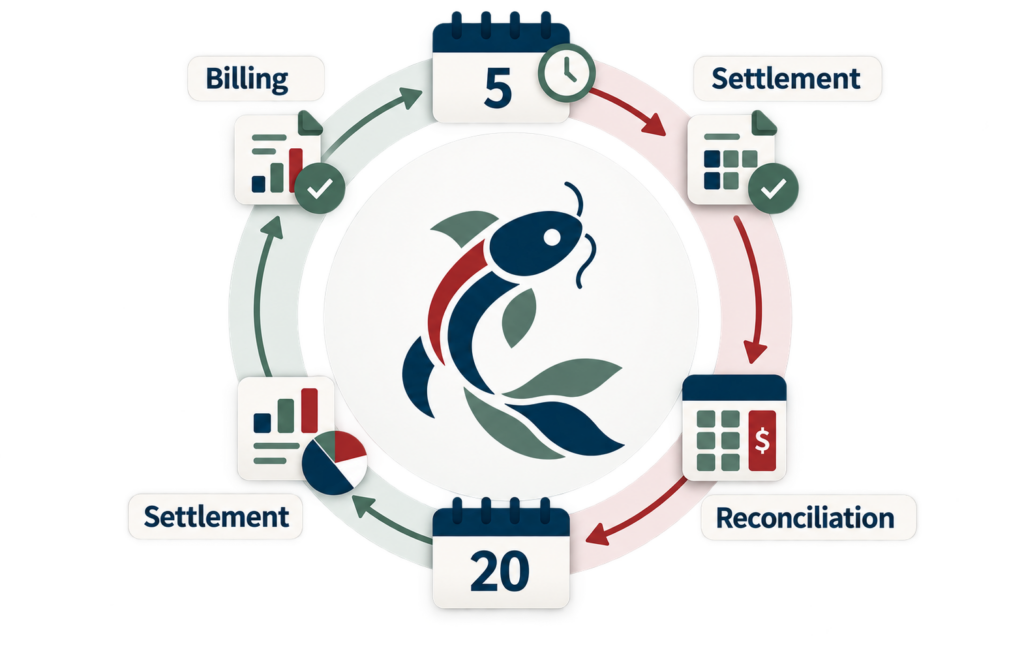
Financial operations run best when processes move together as a coordinated cycle. The FINS framework structures the financial operations rhythm so reconciliation, billing, payroll, and reporting remain aligned and dependable.
Empower Your Firm Around Its Finances
Firms may align with the FINS framework independently or implement it with guidance from Telebooks.
Here is the typical path firms follow.
Helping professional firms implement structured financial systems and reliable reporting.
Telebooks is a boutique firm specializing in financial operations for small project-based professional firms, implementing the FINS Standard in practice and stewarding its continued development.
Sumner Darling is passionate about systems. With master’s degrees in engineering and business from the University of Nebraska and the University of South Florida, respectively, he brings decades of experience designing disciplined operational systems in the life safety and aerospace industries. Today, he applies that systems approach to financial operations for architecture, engineering, and design firms and leads the development of the FINS Standard.
Mariana Darling is passionate about helping teams learn and apply structured systems. With a bachelor’s degree in teaching from the Universidad Nacional Autónoma de México, her experience includes curriculum design and program promotion at the Instituto Politécnico Nacional in Mexico City. At Telebooks, she contributes to the testing and validation of FINS workflows and develops training that supports firms implementing the system.
Financial Operations Advice & Tips for Architecture, Engineering, & Design Firms
As a small architecture firm owner or team member, you face unique challenges every day. You have to streamline projects, manage client communication, and keep track of […]
Managing the finances of a small architecture firm can be challenging, right? You’ve got project billing, payroll, and financial reporting to juggle, and often you’re stuck with […]
Introduction Is your architecture firm missing out on a powerful financial tool that can improve cash flow and boost flexibility? Trade credit for architecture firms is a […]